
Businesses are no longer evaluated solely by how much revenue they generate or how quickly they grow. Customers want to know how products are made. Employees care about workplace conditions and organizational values. Investors increasingly examine non-financial risks. Regulators are introducing new requirements around sustainability, transparency and corporate conduct. This broader way of looking at organizational performance is one reason ESG — Environmental, Social and Governance — has become an important concept in modern business. ESG provides a framework for examining how an organization affects the environment, how it treats people and how it governs itself. It is not simply about producing a sustainability report or setting environmental targets. At its most useful, ESG connects responsible business practices with risk management, organizational strategy, accountability and long-term decision-making. ESG in Simple Terms The easiest way to understand ESG is to think about three questions: Environmental: How does the organization affect the planet? Social: How does the organization affect and treat people? Governance: How does the organization make decisions and hold itself accountable? These three areas cover a wide range of issues. An organization might examine its energy consumption under the environmental category, employee safety under the social category and internal controls under governance. The exact priorities will differ depending on the organization’s activities, size, industry and stakeholders. Why ESG Has Become a Business Issue Environmental and social issues can eventually become business issues. A disruption in a supply chain can affect operations. Poor workplace practices can contribute to employee turnover. Weak data protection can create reputational and financial risks. Ineffective governance can result in poor decision-making or compliance problems. This means ESG is not necessarily separate from traditional business management. Instead, it can help organizations identify factors that may influence their ability to operate effectively over the long term. For many organizations, the conversation has therefore shifted from: “Should we have an ESG program?” to: “Which ESG issues are actually relevant to our organization, and how should we manage them?” The Three Areas Every Organization Should Examine The Environmental Footprint The environmental side of ESG examines how organizational activities interact with the natural environment. Depending on the organization, this could include: Energy consumption Greenhouse gas emissions Waste generation Water use Pollution Natural resource consumption Biodiversity Deforestation Climate-related risks Sustainable sourcing A company with physical facilities may focus heavily on energy use, waste and emissions. A digital business may have a different environmental profile, with greater attention to data-center energy consumption, electronic equipment and responsible technology use. The objective is not necessarily to eliminate environmental impact completely. Rather, organizations can identify their most significant impacts and determine how they can be measured and managed. The Human Side of Business The social component of ESG is concerned with people. That includes employees, customers, suppliers, business partners and communities affected by an organization’s activities. Relevant areas may include: Workplace health and safety Employee compensation Working conditions Employee engagement Training and development Diversity and inclusion Human rights Labor practices Customer satisfaction Data privacy Supplier standards Community relationships Consider a typical organization with hundreds of employees. Its social responsibilities may involve creating a safe workplace, providing fair employment conditions, protecting employee information and ensuring that workers have opportunities to develop their skills. Social ESG therefore extends far beyond charitable activities. It can be connected directly to everyday organizational practices. The Systems Behind Responsible Decisions Governance is sometimes the least visible part of ESG, but it provides the structures through which environmental and social commitments are managed. Governance asks questions such as: Who makes important decisions? Who is responsible for overseeing those decisions? Are financial activities properly controlled? How are risks identified? Are employees able to report misconduct? How does the organization prevent corruption? Are leaders held accountable? Is important information reported accurately? Governance can include: Board oversight Leadership structures Internal controls Financial transparency Risk management Regulatory compliance Ethics policies Anti-bribery procedures Conflict-of-interest policies Whistleblower systems Strong governance helps turn organizational principles into actual processes. For example, an organization may have a policy requiring ethical supplier practices. Governance mechanisms determine who checks suppliers, how compliance is monitored and what happens when standards are not met. ESG Is Not Just an Environmental Agenda One common misunderstanding is that ESG is simply another term for environmental sustainability. Environmental issues are certainly an important part of ESG, but ESG is broader. A business could have excellent environmental practices while still facing serious social or governance concerns. Likewise, an organization could have strong employee policies but inadequate systems for managing financial or regulatory risks. This is why ESG is generally considered a combination of three interconnected areas rather than a single sustainability initiative. What ESG Can Change Inside an Organization A well-designed ESG approach can influence everyday business decisions. It may affect how an organization: Purchases: Which suppliers it works with and what standards those suppliers are expected to meet. Operates: How resources, energy, materials and waste are managed. Employs: How people are recruited, compensated, trained and supported. Protects information: How customer, employee and business data is managed. Manages risk: How environmental, social and governance risks are identified and addressed. Makes decisions: How responsibilities, approvals and accountability are structured. Reports performance: How relevant ESG information is measured and communicated. This makes ESG potentially relevant to many departments rather than being the sole responsibility of a sustainability team. Turning ESG Ideas Into Measurable Objectives An ESG strategy becomes more useful when broad ambitions are converted into measurable objectives. For example, instead of simply saying: “We want to reduce waste.” An organization might establish a measurable target for reducing waste over a defined period. Instead of: “We want to improve employee development.” It could track participation in training, development opportunities or employee-related indicators. The same principle can be applied to governance. An organization could establish measurable objectives around compliance reviews, risk assessments, ethics training or reporting mechanisms. Good ESG objectives should generally have: A clear purpose A measurable indicator A responsible owner A realistic timeframe A method for tracking progress Where Should
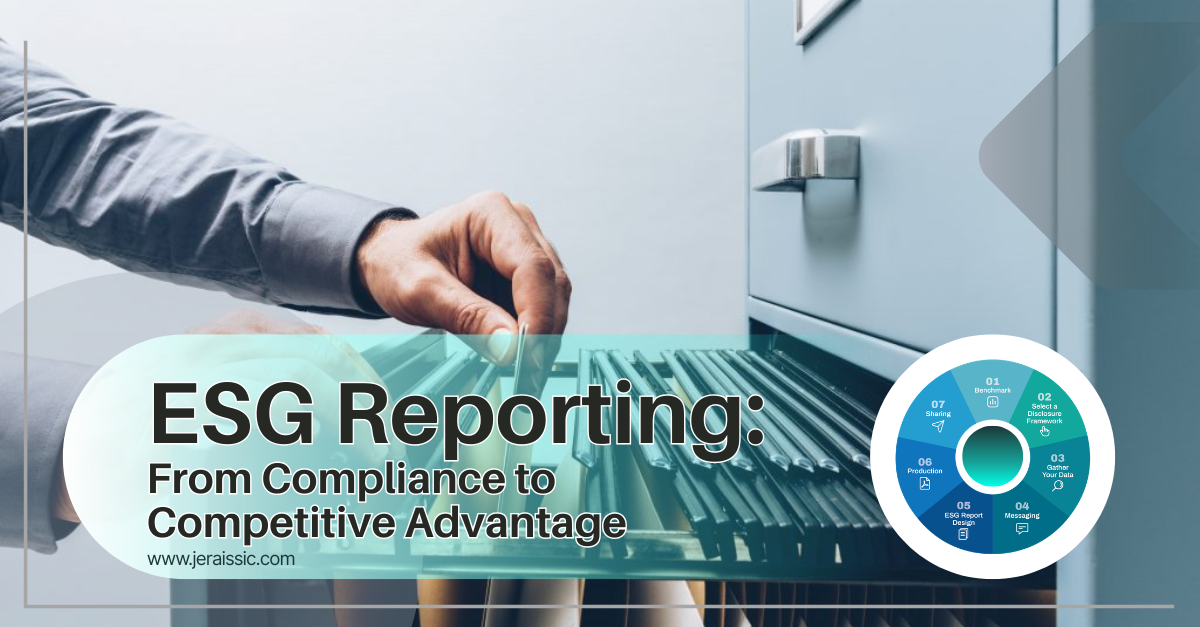
ESG Reporting: From Compliance to Competitive Advantage
Why ESG Reporting Matters More Than Ever Environmental, Social, and Governance (ESG) reporting has evolved from a voluntary corporate initiative into a strategic business imperative. Around the world, investors, regulators, customers, and communities are demanding greater transparency from organizations regarding their environmental impact, social responsibility, and governance practices. Businesses that embrace ESG reporting are no longer simply meeting compliance requirements—they are building trust, attracting investment, reducing risk, and positioning themselves for long-term success in an increasingly sustainability-focused economy. The question is no longer whether organizations should report on ESG performance, but how effectively they can integrate sustainability into their business strategy. Understanding ESG ESG represents three critical dimensions of sustainable business performance: Environmental Environmental factors assess how an organization impacts the natural world. This includes carbon emissions, energy consumption, waste management, water stewardship, biodiversity protection, and climate resilience. Social Social factors focus on relationships with employees, customers, communities, and stakeholders. Topics include workplace safety, diversity and inclusion, human rights, employee wellbeing, community development, and customer satisfaction. Governance Governance examines how an organization is directed and controlled. It covers ethics, transparency, compliance, risk management, board oversight, anti-corruption measures, and accountability. Together, these three pillars provide a comprehensive view of organizational sustainability and long-term value creation. The Foundation: Materiality Assessment One of the most important steps in any ESG journey is identifying material issues. A materiality assessment helps organizations determine which sustainability topics are most relevant to their stakeholders and most impactful to their operations. Rather than attempting to address every ESG issue, businesses can focus their resources on areas where they can create the greatest value and impact. For example, a tourism organization may identify carbon emissions, heritage preservation, local economic development, and community engagement as its most material topics. A manufacturing company, on the other hand, may prioritize energy efficiency, waste reduction, and supply chain sustainability. Understanding what matters most allows organizations to build focused and meaningful ESG strategies. Stakeholder Engagement Drives Better Outcomes Successful ESG reporting requires ongoing engagement with stakeholders. Customers, employees, investors, suppliers, regulators, local communities, and industry partners all have expectations regarding sustainability performance. Organizations that actively listen to these groups gain valuable insights into emerging risks, opportunities, and priorities. Stakeholder engagement should not be viewed as a one-time exercise. It is an ongoing process that helps organizations remain aligned with evolving expectations while strengthening relationships and trust. Measuring What Matters Effective ESG reporting depends on reliable data and meaningful performance indicators. Organizations should establish Key Performance Indicators (KPIs) that align with their sustainability goals. These metrics may include: Greenhouse gas emissions Energy consumption Renewable energy usage Employee training hours Workplace safety performance Community investment initiatives Board diversity Compliance and ethics indicators By consistently measuring performance, organizations can identify trends, monitor progress, and make informed decisions. Transparency Builds Trust One of the most important lessons in sustainability reporting is that transparency matters more than perfection. Stakeholders increasingly recognize that no organization has solved every sustainability challenge. What they value is honesty regarding achievements, challenges, risks, and opportunities for improvement. Organizations should avoid vague sustainability claims and instead provide measurable evidence of progress. Transparent reporting strengthens credibility and reduces the risk of greenwashing accusations. Trust is earned through openness, accountability, and continuous improvement. Aligning with Global Frameworks To ensure consistency and comparability, many organizations adopt internationally recognized sustainability frameworks. Popular frameworks include: Global Reporting Initiative (GRI) Sustainability Accounting Standards Board (SASB) Carbon Disclosure Project (CDP) Task Force on Climate-related Financial Disclosures (TCFD) United Nations Sustainable Development Goals (SDGs) These frameworks provide guidance on reporting standards, performance indicators, and disclosure requirements, helping organizations communicate sustainability performance more effectively. ESG as a Strategic Advantage Organizations that integrate ESG into their operations often experience benefits that extend far beyond compliance. These benefits include: Enhanced reputation and brand value Increased investor confidence Improved risk management Greater operational efficiency Stronger customer loyalty Better employee attraction and retention Access to sustainable financing opportunities ESG reporting also encourages organizations to identify inefficiencies, reduce resource consumption, and develop innovative solutions that create both environmental and financial value. The Future of Sustainable Business As regulatory requirements continue to evolve and stakeholder expectations grow, ESG reporting will become an essential component of business success. Organizations that begin their sustainability journey today will be better prepared for future challenges and opportunities. By establishing clear goals, engaging stakeholders, measuring performance, and reporting transparently, businesses can create lasting value for society, the environment, and their shareholders. ESG is no longer simply about reporting what an organization has done. It is about shaping a more sustainable future while building resilient, responsible, and competitive businesses. The journey begins with a commitment to measure, improve, and lead with purpose.